
Event management services in Egypt have evolved significantly over recent years, not just in market size or the number of companies operating in the space but also in the way the entire discipline is approached.
Companies that once viewed an event as a single-day occasion have started seeing it as a genuine tool for building trust and strengthening brand image.
A customer who attends a product launch or conference in person is far more prepared to make a purchase decision or build a relationship with a brand compared to someone who simply saw an ad on their phone.
This is why events are no longer just about a venue, equipment, and managing entry. They are complete experiences that shape how people perceive the company itself.
Event management services in Egypt no longer depend solely on coordinating between suppliers or executing a day’s schedule exactly as written. They depend on the ability to manage every detail that creates the attendee experience: timing, entry flow, lighting, screens, registration, and finding fast solutions to any problem without the audience ever sensing what’s happening behind the scenes.
At WIS Marketing, planning doesn’t begin with the stage design or number of seats. It begins with a different question: what do people need to remember after this event ends? Because conferences and large-scale events aren’t measured by attendance numbers alone.
They’re measured by the impression that remains after the last person walks out of the room.
Event Management vs. Event Organization: What’s the Difference and Why Does It Matter?
Many people still associate event management with “organizing a day” or setting up a venue nicely. The reality is that event management today is closer to managing a complete experience where dozens of details move simultaneously, and any one of those details can determine whether the event succeeds or fails.
Event management is not just executing a task list or coordinating between suppliers. It’s a process that combines planning, marketing, crowd management, technology, and an understanding of how people interact within a space.
From the moment a guest enters to the moment they leave, everything must be calculated: the registration flow, the timing of each segment, audio quality, lighting, how quickly problems are handled, and the feeling attendees carry with them when it’s over.
This is where the real difference between “organizing” an event and “managing” one becomes clear.
Organization is concerned with executing what’s required as written. Management is concerned with what happens when things don’t go as expected.
An event organizer might focus on arranging the stage and chairs, while an event manager thinks about the entire attendee experience.
- Is entry easy?
- Is the audience engaged?
- Is the schedule flexible?
- And what happens if a technical problem surfaces while the event is live?
This is exactly why major companies are no longer just looking for a team that executes events. They’re looking for a team that can hold composure under pressure and make fast decisions without the audience ever noticing what’s happening behind the scenes.
Why Events Have Become a Marketing Tool, Not a Luxury, in 2026
Years ago, many companies treated events as a form of indulgence or simply an occasion to show up and be photographed. That mindset has shifted dramatically, especially as digital advertising costs have risen and competition for customer attention has intensified.
The fundamental difference is that an event doesn’t just give the customer a “view” of the brand. It gives them a complete experience they live through personally.
They see the product up close, speak with the team, hear the story directly, and connect the company’s name to a real experience rather than a fleeting ad on their phones.
Companies that run powerful events don’t just gain attendance. They gain faster trust, deeper engagement, and direct data about their customers and audience.
The event management market in Egypt has grown by 18% annually since 2024 and is expected to reach a value of 1.4 billion dollars by the end of 2026. Demand for hybrid events that combine in-person attendance with live streaming has also risen by 60%, particularly as companies look to reach audiences both inside and outside Egypt at the same time.
How to Choose an Event Management Company in Egypt
Choosing an event management company should not be based on the look of a portfolio alone or on who offers the lowest price. Most real problems don’t surface before the event. They surface during it.
Every company may appear organized in the first few meetings, but the real difference emerges when the schedule changes suddenly, unexpected pressure builds, or a technical problem appears minutes before the event begins.
That’s when you discover whether you’re working with a team that “organizes events” or a team that knows how to manage a complete event under pressure.
Experience Is Not Just About Years
Some companies have been operating for many years, but still execute in the same traditional way. What matters more than how long a company has been in business is the type of events they’ve managed.
Always ask whether they have experience with your specific type of event, whether they’ve managed large conferences before, and whether they’ve handled audiences similar to yours. Managing an investment conference is completely different from a product launch or an internal corporate event.
The Portfolio Should Show Thinking, Not Just Photography
Many portfolios look visually beautiful, but photographs alone don’t reveal the quality of actual management. What to pay attention to is how attendees were organized, the quality of execution, the scale of the event, and how the overall experience was structured.
A strong company doesn’t just present “decor.” It shows how the event succeeded as a whole.
Crisis Management Matters More Than Schedule Management
Any company can execute an event when everything goes perfectly. But large events always involve something unexpected: a delayed speaker, a technical failure, more attendees than anticipated, or a sudden change in the schedule.
What matters is whether the company has backup plans and how it handles pressure during execution.
At WIS Marketing, every event is built with contingency scenarios and ready solutions prepared before the event begins, because the speed of response during a problem is what protects the attendee experience.
The Ability to Execute Under Pressure Is the Real Test
Ultimately, an event is not measured by what happens during preparation meetings. It’s measured by what happens in the hours before the doors open to attendees.
This is where the real difference appears between a company that executes what’s required and a company that can keep the team calm, make decisions quickly, and maintain execution quality even when things become more complex than expected.
What Actually Happens Inside WIS from the First Call to the End of the Event
Many clients see a successful event and assume the whole thing was just “setting up a venue and executing a day.” The reality is that a professional event is built across five integrated stages, and each one directly affects what comes after it.
Stage One: We Understand Before We Book
The first thing we do is not look for a venue. We sit with you to answer one question: why does this event exist?
If the answer is “because our competitor did it,” that’s a failure waiting to happen. We establish clear KPIs with you from the beginning. Is the objective direct sales? Brand awareness? Building a professional network? Based on that objective, we determine the type of event, its scale, and the nature of the experience we want to create.
This stage alone saves 30% of the costs that are typically wasted on elements that don’t actually serve the objective.
Stage Two: Planning, Budget, and Timeline
We build a reverse countdown timeline that starts from the event day and extends six months backward. Every supplier, every preparation item, and every decision has a specific deadline.
The budget is allocated intelligently, with spending focused on the elements that create the highest visual and emotional impact for attendees. There are no hidden costs that appear at the last minute. Full financial transparency is in place from the very first price proposal.
Stage Three: Venue Selection and Supplier Management
The venue is half the success, but we didn’t choose the most beautiful option. We choose what’s most logistically suitable for the event’s objective and its audience.
Is parking sufficient for the expected attendance? Can the internet speed handle live streaming? Does the interior layout serve the attendee’s journey through the event? Our relationships with major hotels and conference centers in Egypt give our clients pricing and advantages that wouldn’t be available to someone negotiating alone.
Stage Four: Execution Day
This is where the real value of management becomes visible.
We use RFID tracking systems to monitor attendee distribution accurately and manage resources in real time. Sound and lighting are not just technical setups.
Lighting is a dramatic tool that directs the audience’s attention, and sound is an engineered system that ensures message clarity reaches every seat in the room.
Every technical system has a redundant backup system that activates automatically in case of any failure. A ten-second lighting failure during a product launch means that a historic reveal moment is lost permanently. Our execution standard operates in fractions of a second.
Stage Five: Measurement and Post-Event Reporting
The event doesn’t end when the last guest leaves. It ends when we deliver a complete report measuring actual impact against the objectives we defined together at the start.
The number of leads generated, the value of deals that began at the event, and the social media engagement rate during the event: these are the metrics that demonstrate the investment had genuine meaning.
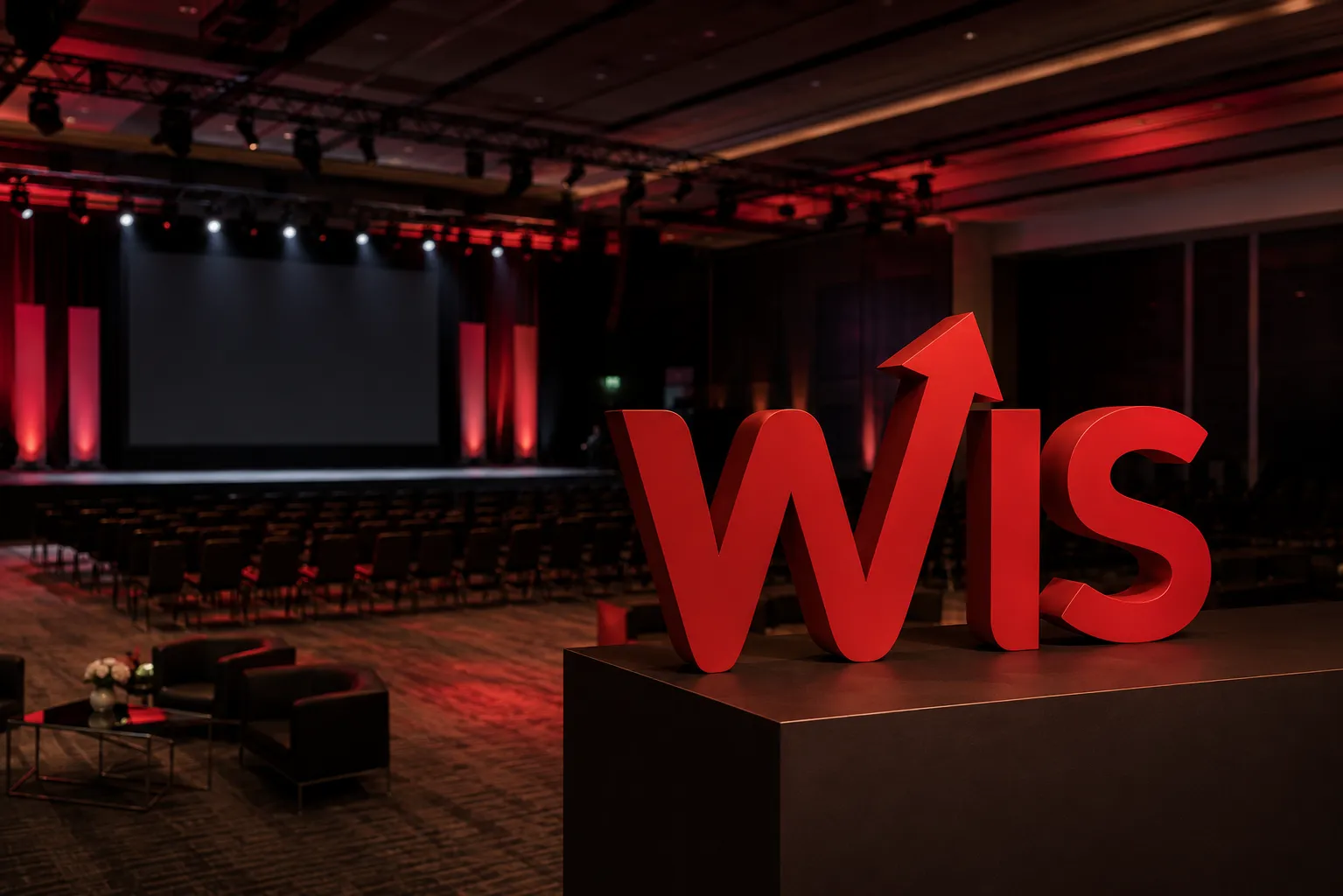
Types of Events WIS Manages
Corporate Events
This category is currently one of the largest segments of the events market in Egypt, particularly as major companies and brands continue expanding. It includes annual meetings, company celebrations, employee recognition events, and team-building activities.
In 2026, these events are no longer just a “company party” or a formal dinner. Many companies now use them to build stronger internal culture, deepen the employee-brand relationship, and even announce new plans and strategies in a more engaging format.
Conferences and Summits
This is one of the most organizationally complex event types because a small mistake can affect the experience of hundreds or thousands of attendees.
Managing a large conference doesn’t just mean preparing a stage. It includes managing registration and entry, coordinating the speaker schedule, providing simultaneous translation, managing the crowd, and handling dozens of details at the same time.
At WIS Marketing, conferences are treated as complete experiences, not just session schedules that run for hours.
Product Launches
Here, the first impression is almost everything.
Launching a new product, real estate project, or technology application requires an experience that makes people remember the moment itself, not just the product being unveiled.
Modern launch events rely on visual impact, lighting, special effects, and the way the story is told. In some events, a few seconds during the reveal moment are the most important seconds of the entire day, because every camera in the room and all the content shared afterward on social media will depend on that moment.
Managing this type of event requires extremely precise timing and execution, because any small detail can affect the image the brand wants to leave with the audience.
Hybrid Events
These combine in-person attendance with digital participation simultaneously. Demand for them has risen 60% in the Egyptian market to accommodate international investors and partners.
Why Choose WIS to Manage Your Event?
The problem with most events isn’t the idea. It’s the execution. Many events begin with great enthusiasm, then details get lost under pressure, fast changes, and the sheer number of parties involved in a single day.
At WIS Marketing, we don’t treat an event as just “an organizing day. ” We treat it as a complete experience that must reflect the brand’s level from the very first moment to the moment the last person leaves the room.
This is why we don’t rely on a fixed template or a single execution approach for every client. Every event is built according to the audience’s nature, the real objective of the occasion, and the impression the company wants to leave after it ends.
Some events are about building trust. Some are about launching a product with impact. And some are about making attendees feel that this brand is genuinely different from competitors.
From the first planning stage through execution management, technical coordination, and attendance management, every detail is handled with a marketing mindset rather than just an operational one.
We believe the success of an event doesn’t show in the applause inside the room. The real impact appears in how attendees remember the brand after the event ends.
Frequently Asked Questions
What does a professional event management service include?
Strategic planning, venue selection and supplier negotiation, technical audio-visual setup, attendance management, full execution on the event day, and a results measurement report delivered afterward.
How much does organizing an event in Egypt cost in 2026?
Corporate events start from 150,000 EGP and reach into the millions for large conferences. The more precise figure depends on the event’s scale, the type of equipment required, and the number of execution days.
How do I measure the return on investment from an event?
We establish performance indicators with you before the event, then measure them after it. These include the number of leads generated, the value of deals initiated at the event, and the social media engagement rate. An event that isn’t measured cannot be improved.
What’s the difference between event management and regular organization?
The organization executes a task list. Management holds a complete vision and takes responsibility for the outcome. The practical difference appears when a crisis occurs, and in large events, crises always occur.
Conclusion
Successful events aren’t created on execution day. They’re the result of dozens of small decisions that begin weeks or months before the occasion, and each one of those decisions affects how people will see the brand after the event ends.
Event management services in Egypt are no longer just about organizing a venue or coordinating a schedule. They have become a complete process combining planning, technology, experience management, and the ability to handle pressure without the audience ever sensing any chaos behind the scenes.
At WIS Marketing, we understand that any major event cannot tolerate randomness or delayed decisions. This is why we pay attention to every detail from the beginning, not just to make the event look organized, but to ensure attendees leave with an impression that genuinely reflects the brand’s strength and the company’s standard.
Whether you’re planning a conference, a product launch, or a corporate event, the real difference always comes down to execution and how details are managed under pressure.
If you’re looking for a team that can execute an event professionally and knows how to make the experience run smoothly from the first minute to the last, the WIS Marketing team is ready to help you deliver an event that matches the brand you’re building.