
In the Egyptian market today, a promotional video is no longer just a visibility tool. It has become a core factor in shaping brand image and building customer trust. The problem is that many companies spend large budgets on videos that look visually polished but have no real impact because they focus solely on filming and forget the message and strategy behind them.
A customer doesn’t judge the video’s quality in isolation. They connect the level of the video directly to the level of the company itself.
This is why major companies have started looking for a promotional video production partner that understands marketing as well as it understands production and knows how to turn a video from visual content into a tool that builds trust and supports sales.
At WIS Marketing, we don’t start with the camera. We start by understanding the brand, the audience, and the objective of the video so we can produce content that reflects the company’s values professionally and delivers measurable results.
In this guide, you’ll learn how to choose a professional promotional video production company, what criteria separate an “ordinary” video from one that truly reflects brand value, and why major companies rely on partners who think strategically before they start filming.
What Is a Promotional Video and What Makes It Different?
Before deciding what type of video you need, you should understand the difference between the three types that many advertisers confuse, because mixing them up means producing the wrong content for the wrong objective.
Promotional vs. Commercial vs. Corporate: The Core Differences
A promotional video focuses on triggering emotion and creating desire. It doesn’t sell directly. Instead, it builds a connection between the customer and the brand that makes them think of it when they’re ready to make a purchase decision. It’s best suited for product launches and awareness building.
A commercial video is shorter and more direct, with a single message and a clear call to action. It’s designed for direct selling or immediate response and is used in paid campaigns on YouTube, Facebook, and television.
A corporate video showcases the company’s strength, history, and team. It’s directed at business partners, investors, and potential employees, not at the end consumer.
When Do You Specifically Need a Promotional Video?
There are three situations where a promotional video is the smartest choice. The first is when you’re launching a new product and want to create a fast buzz that reaches beyond your existing audience.
The second is when you want to differentiate yourself from competitors offering the same service in the same way, because a promotional video is what makes your audience feel your brand is different, even if the product is similar.
The third is when your goal is brand awareness rather than immediate conversion.
In the Egyptian real estate market specifically, videos using cinematic filming techniques achieved a 65% higher conversion rate compared to static images.
Failing to identify the right type from the beginning means wasting the entire production budget on content that doesn’t serve your objective.
Where Is Promotional Video Used in 2026?
Distribution matters as much as production, and the most common mistake is producing a single version and then cropping it to fit every platform. Each platform has its own audience behavior and technical requirements.
|
Platform |
Ideal Ratio |
Audience Behavior |
Note |
|
YouTube |
16:9 horizontal |
Actively searching for content |
Best for long-form, high-quality videos |
|
TikTok / Reels |
9:16 vertical |
Passive scrolling |
Needs a version shot specifically for vertical, not just cropped |
|
Facebook / Instagram Feed |
1:1 or 4:5 |
Mixed |
The hook in the first 3 seconds is critical |
|
Television |
16:9 broadcast specs |
Wide, diverse audience |
Still highly effective for real estate and consumer goods |
|
Digital OOH + QR |
Varies |
Road audiences |
The dominant trend in Cairo and Sheikh Zayed in 2026 |
8 Criteria for Choosing a Professional Promotional Video Production Company in Egypt
Choosing a promotional video production company shouldn’t be based on price or the look of their showreel alone. The real problem usually surfaces after filming, when you discover the video doesn’t reflect the brand’s strength or create any actual impact on customers.
In today’s Egyptian market, the difference between an “ordinary” video and one that visually elevates a company doesn’t come down to the camera alone.
It comes from many details that begin before filming and end after editing. These are the core criteria to evaluate any company against before signing a contract.
1. A Showreel, specifically in Promotional Video Work
Don’t settle for watching conference or wedding videos. Ask for a portfolio specifically in commercial advertising and promotional content. When reviewing the showreel, focus on lighting quality, camera movement, how scenes are constructed, and color grading.
Then ask yourself honestly whether this level of work reflects the image you want your brand to project.
An important tip: ask to see a complete project, not just the best 20 seconds. Some companies present powerful highlights, while the full video is significantly weaker.
2. Ownership of Real Filming Equipment
Shooting with ordinary cameras is no longer competitive in 2026. The camera alone doesn’t make a successful video, but it directly affects image quality and the flexibility of editing afterward.
Professional companies rely on cinema cameras such as RED, ARRI, or the Sony FX Series, cinematic lenses that produce professional visual depth, and stabilization and motion equipment like gimbals and sliders.
The real difference shows up in the details: color grading flexibility, low-light shooting quality, and the image’s ability to look premium on large screens and paid ad placements. Always ask directly: “Which cameras will you use for my project?”
3. A Specialized Lighting Team
The biggest mistake beginners make is relying on ambient light or a single overhead light. Lighting is what creates the overall mood of a video and what makes a product look premium or ordinary.
A professional company has a gaffer, lighting assistants, and adequate equipment for every type of shooting environment. Lighting quality often makes more of a difference than the camera itself.
4. In-House Post-Production, Not Outsourced
Post-production includes editing, color grading, sound engineering, music, and visual effects. When these processes go outside the company, the consistency of vision is lost, delivery timelines stretch, and revision cycles multiply.
Editing is writing the story a second time, and whoever writes it needs to have understood the original vision from the beginning.
5. Casting Capability and Actor Direction
A successful promotional video needs faces that convince the viewer and build trust. A professional company has a broad casting database and experience in directing talent to deliver the best performance in the least amount of time.
A customer doesn’t just respond to “attractive appearance.” They respond to the feeling that the person inside the video conveys.
Talent selection must be based on the audience profile, the brand’s positioning, and the type of message being communicated. Choosing the wrong talent, whether in terms of appearance, performance, or fit with the target audience, can turn an ad into something people mock rather than connect with.
6. Experience in Your Specific Sector
Filming a video for a restaurant is completely different from filming a real estate project or a B2B company. Every sector has a different visual language, a different persuasion approach, and a different audience behavior.
Real estate requires wide cinematic shots that reflect luxury. Restaurants rely on detail and slow motion. Technology companies need clarity and speed in communicating the idea.
The more a company understands your sector, the more time you save on unnecessary explanations and repeated trial runs.
7. A Clear and Binding Delivery Timeline
In the digital marketing world, timing is decisive. A two-day delay in delivering a Ramadan campaign launch video can mean losing millions of pounds in sales opportunities.
A professional company must provide a clear production timeline with deadlines for each stage and a defined number of revision rounds.
Always ask about the actual average delivery time, not the “ideal” one.
8. Full Transparency in Pricing and Revision Rounds
Be cautious about hidden costs. Make sure the price quote covers everything, including music, voice-over, drone footage if required, and permit costs.
The number of available revision rounds must also be defined in the contract, because “unlimited revisions” usually means an unprofessional approval process that turns the project into an endless loop of changes.
Types of Promotional Videos and Their Cost in Egypt 2026
Choosing the type of promotional video not only affects the content’s look. It also determines how it’s filmed, what team is needed, the budget size, and even the type of audience that will engage with it.
One of the most common mistakes is using the same filming approach for all business types. The reality is that each sector needs a completely different visual treatment.
A real estate video, for example, isn’t filmed the same way as a restaurant or a service company video, because the customer’s psychological goal and decision-making process differ in each case.
Product Promotional Video
This type relies primarily on visual detail. The goal isn’t just to “show” the product but to create a sense of quality and desire.
It requires very precise lighting, specialized lenses that highlight materials and textures, and calculated camera movement that gives the product a professional or luxury character, depending on the brand.
This type is widely used in cosmetics, electronics, food products, and luxury goods. Costs in Egypt typically range between 40,000 and 150,000 EGP, depending on the level of visual complexity and the number of products being filmed.
Service Promotional Video
The challenge here is different, because you’re not selling something tangible that can easily be filmed. The focus shifts to building trust and explaining the value the company delivers to the customer.
These videos rely more heavily on scripting, voice-over, and motion graphics or infographics to simplify the idea and persuade the viewer.
This type works very well for technology companies, medical services, B2B businesses, and consulting firms. Costs typically start from 30,000 EGP and increase depending on the level of graphics and the number of shooting days.
Event Promo and Teaser
These videos are built around creating a feeling of excitement and anticipation. The goal isn’t to explain details but to generate a sense that something important is coming that the audience must follow. They rely on fast-paced editing, impactful music, and dynamic shots.
In recent years, the teaser has become a core component of any major event, particularly in exhibitions, conferences, and real estate project launches. Success here depends on the video’s ability to create anticipation more than on explaining specifics.
Real Estate Promotional Video
This is currently one of the most in-demand video types in Egypt, because competition in the real estate market increasingly depends on the strength of visual presentation.
Customers are no longer satisfied with static images. They want to feel the space and lifestyle inside it before visiting in person.
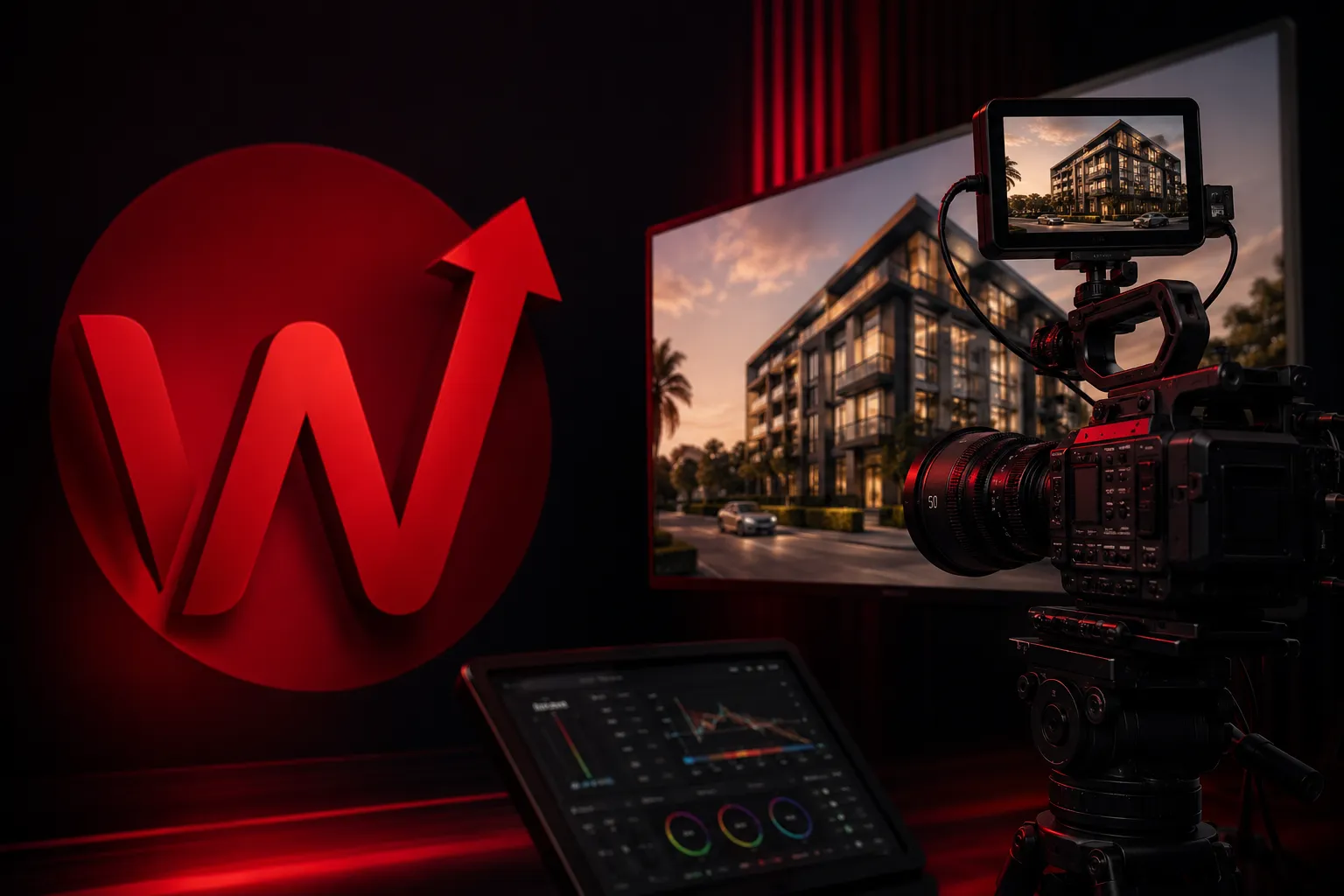
Professional real estate videos rely on aerial drone footage, wide-angle lenses, and cinematic camera movement, with significant attention to lighting and color grading to showcase the project in its best form.
This is also why real estate videos are among the most expensive types, with costs ranging from 60,000 to 250,000 EGP for large projects and compounds.
Restaurant and F&B Promotional Video
Food photography is a science in itself. Slow-motion sauce pours, rising steam, and close-up shots of fresh ingredients: these techniques combined can raise purchase desire by 40%, according to consumer behavior research.
A professional food video on Instagram can visibly change a restaurant’s reservation numbers within weeks.
There is no single best video type in absolute terms. There is only the type that suits your objective, your audience, and how they make purchase decisions. This is why major companies don’t just ask about filming costs.
They start with the more important question: what type of video can genuinely present the brand in a way that achieves the desired impact?
Factors That Determine Filming Costs
- Camera type and equipment: Renting an ARRI Alexa Mini costs five times what a Sony Alpha does. Camera choice depends on the platform and purpose. For large screens in malls or on television, full cinematic quality is non-negotiable. For digital content, high-quality Cinema Line cameras may be sufficient at a lower cost.
- Number of shooting days and team: the shooting day is the basic unit of cost. Every additional location means an additional day, and every day means a full team cost covering the director, director of photography, sound engineer, lighting assistants, and production manager.
- Location: filming in public spaces or tourist areas in Egypt requires official permits that carry their own costs. A studio provides full lighting control but requires a budget for set construction or space rental. Natural outdoor locations are visually richer but logistically more complex.
- Cast and talent: a professional actor saves time because they deliver the required performance from the first take without training sessions or repeated shots. Employees may need more time to overcome camera anxiety. Talent costs vary significantly based on recognition, experience, and sector.
- Post-production complexity: basic editing is fundamentally different from adding 3D elements, replacing backgrounds with chroma key, or heavy visual effects. In 2026, artificial intelligence has entered some post-production workflows to speed up certain processes, but the human touch of a skilled editor still makes the decisive difference in the final result.
Warning Signs: Companies to Walk Away From Immediately
They don’t own equipment and always rent: renting equipment is an accepted practice in the market, but a company that doesn’t own the minimum essential gear usually lacks deep technical expertise.
A technical problem that appears on a shooting day won’t be resolved quickly.
A showreel filled only with social media videos: shooting mobile reels is completely different from producing a brand promotional video. If all their work revolves around trends and daily content, they’re not equipped to produce a cinematic ad that serves a long-term strategy.
They give you a price without seeing the brief: any company that offers a fixed-price package without knowing your concept and objective is operating as a production factory, not a creative partner. Every promotional video has its own requirements that determine the budget. These can’t be priced without understanding them first.
No clear contract or unlimited revisions: the absence of a contract means no guarantees of intellectual property rights or delivery deadlines. “Unlimited revisions” usually means no professional stage-approval process, which turns the project into an endless revision cycle.
WIS Marketing: Promotional Video Production in Egypt 2026
At WIS Marketing, we don’t treat promotional videos as simply a filming or editing process. We treat it as a core part of how the customer perceives the brand.
This is why we don’t start with the camera. We start by understanding the market, the audience, and the real objective of the video, because visual quality alone is no longer enough to create a genuine impact in 2026.
One example that illustrates this involved a real estate developer in Nasr City with a strong project, but their advertising campaign wasn’t delivering the expected results.
After analyzing the content being used, the problem was clear: the video didn’t reflect the project’s actual level or the sense of luxury that was needed to reach the customer. The image looked visually flat, the lighting was one-dimensional, and the editing didn’t build any real feeling toward the space.
We rebuilt the video from scratch, starting with cinematic lighting and the way facades and interior spaces were filmed, all the way through to original music composition and color grading. The result wasn’t just a “better-looking” video. It was a measurable improvement in campaign performance.
The click-through rate rose noticeably, and the cost per lead dropped significantly because the way the project was presented became far more convincing and impactful.
This is where the real difference shows between a company that executes filming only and a company that understands how to use the image as a marketing tool that supports sales and builds brand value.
This is why we invest in the following:
- Professional cinematic filming equipment
- Specialized lenses and lighting setups tailored to each content type
- An in-house post-production team that cares about the fine details that make the decisive difference in the final result
But more important than the equipment itself is our understanding of each sector’s nature. Filming a restaurant isn’t built the same way we film a real estate project or a B2B company because each audience interacts with visual content differently.
From real estate to restaurants, medical services, and corporate companies, our approach always follows the same principle: produce a promotional video that makes the customer see the brand the way it deserves to be seen, not just a video that looks good on a screen.
Conclusion
Choosing a promotional video production company in Egypt isn’t a budget decision. It’s a decision about the level of impact your brand will leave on your audience’s mind. A professional company doesn’t just produce beautiful videos. It builds a visual selling tool that works for you around the clock.
If you’re ready to elevate your brand visually, contact the WIS team for a free consultation and a detailed price proposal.
Frequently Asked Questions
What’s the difference between a promotional and a commercial video?
A promotional video aims to build an emotional connection and communicate product advantages over a longer duration. A commercial is shorter, more direct, and designed for immediate sales response or direct action.
How long does producing a full promotional video take?
Actual filming takes one to three days, but the complete process from preparation to delivery takes two to three weeks. Seasonal campaigns need planning to start at least a month in advance.
Is a promotional video suitable for small businesses?
Yes. In 2026, video is the most efficient long-term tool for reaching audiences and building credibility. Small businesses can start with smart videos on a moderate budget and achieve an impact that goes beyond their size.